Explore the ocean
like never before
Explore by Country


Every dive begins before entering the water
Exploring the sea means understanding its rhythms, its species, and its seasons. Theoceanguide was born to help you discover it with knowledge and respect.
Our selection of marine species for you

Blue-Ringed Octopus
Hapalochlaena spp.Hapalochlaena spp., commonly known as blue-ringed octopuses, are a genus of highly venomous cephalopods found in shallow Indo-Pacific waters. Despite their small size, typically 10-25 cm, they possess a potent neurotoxin (tetrodotoxin) capable of paralyzing prey and posing a danger to humans if provoked. They are characterized by iridescent blue rings that flash as a warning when the animal feels threatened.

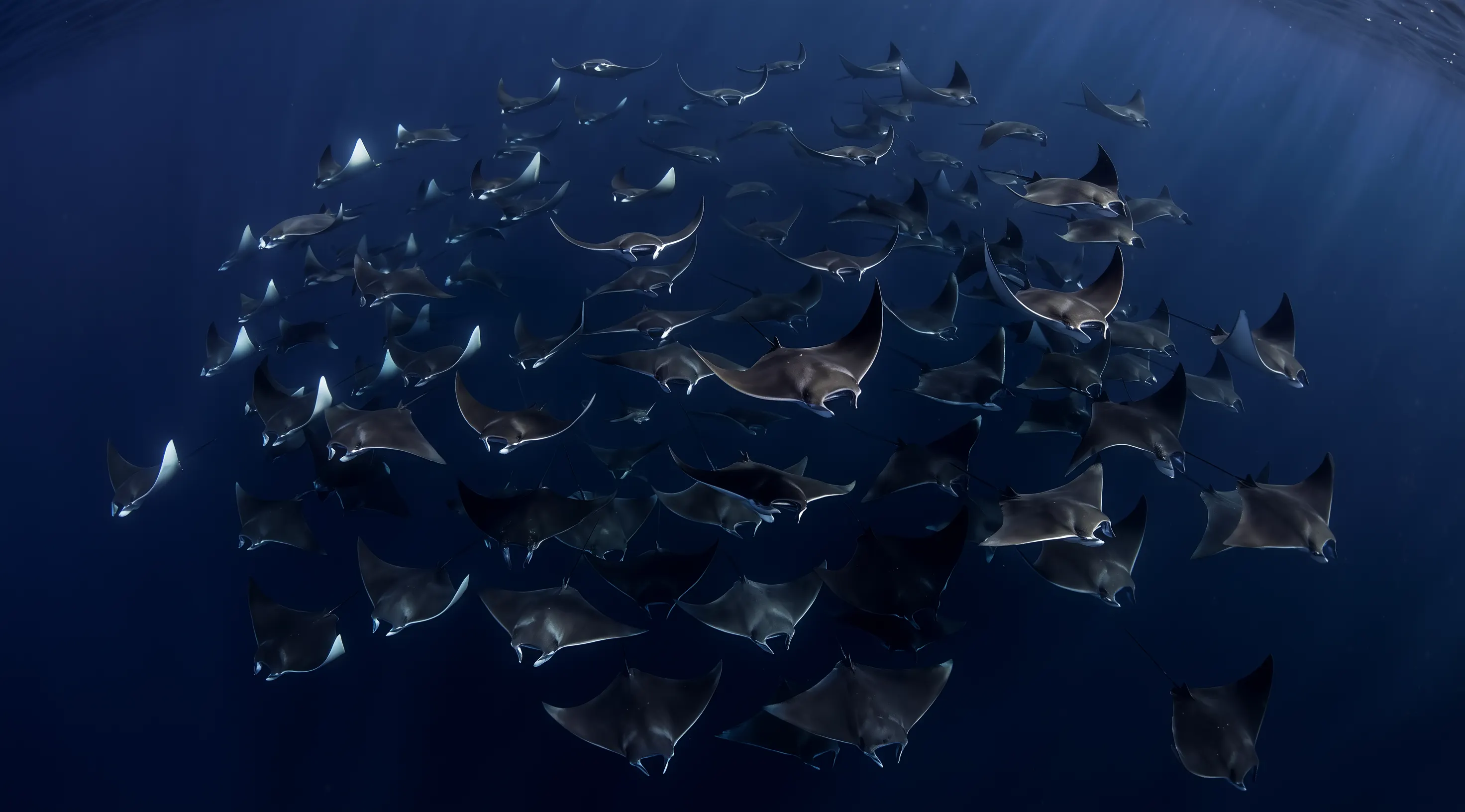
Giant Oceanic Manta Ray
Mobula birostrisThe Giant Oceanic Manta Ray is the world's largest ray, with a disc width that can reach up to 9 meters. It is a circumglobal species found in tropical to temperate pelagic waters, often near coastlines, reefs, and in the open ocean, diving to depths of 1,000 meters. These filter feeders primarily consume zooplankton, including mesopelagic sources, and can also eat small fish. While generally solitary, they aggregate at feeding grounds and cleaning stations. The species is currently listed as Endangered due to overfishing and low reproductive rates.

Green Sea Turtle
Chelonia mydasThe green sea turtle is a large marine reptile distinguished by its heart-shaped carapace and a single pair of prefrontal scales.

Great White Shark
Carcharodon carchariasThe Great White Shark is the largest known predatory fish, characterized by its torpedo-shaped body, conical snout, and large, serrated triangular teeth. It is an apex predator found in temperate and tropical waters worldwide, playing a crucial role in marine ecosystems. This species exhibits regional endothermy, allowing it to maintain a body temperature higher than the surrounding water, which aids in its active predatory lifestyle.